From Toad Catching to Tech: The Story Behind ToadTurret
The Nightly Routine
If you have ever lived on a property in cane toad territory, you know the routine. Every night after dark you head out with a torch and a bag. You walk the yard and check around the dog bowls and garden taps. Then you move on to the veggie patch and retaining walls. You collect what you can. You deal with them. And then you go to bed knowing there’ll be a whole lot more out there in no time.
We have been doing this for years on our hobby farm in Lowood, Queensland. Some nights we collected ten toads. Sometimes it was twenty or more. It never seemed to make a dent in the population. They just kept coming.
It is exhausting and unpleasant work. After a while, we started asking the question that probably every toad-affected property owner has asked at some point.
”There Has to Be a Better Way”
A single female cane toad can lay over 30,000 eggs in one clutch. They breed multiple times a year. You cannot outcatch that kind of reproduction rate by hand no matter how dedicated you are with a torch and a bucket.
We started thinking about what an automated solution might look like. The idea was simple in theory. A camera watches for toads. Some kind of AI tells a toad from a frog. Then a mechanism does something about it. In practice, it turned out to be a much bigger project than we expected.
Early Prototypes
The first version was rough. Really rough. It was a camera bolted to a board and running on a Raspberry Pi. The half-trained AI model was one we had built ourselves. Neither of us were AI experts. We learned as we went.
Training the very first model meant going out into the backyard night after night. We photographed toads from every angle and in every lighting condition. We captured them in every position. This gave us hundreds and hundreds of images that all had to be labelled by hand.
The excitement when the system made its first correct detection was something else. But it was quickly tempered by reality. The early model also detected shoes as toads. And garden hoses. And shadows.
Making It Work for Real
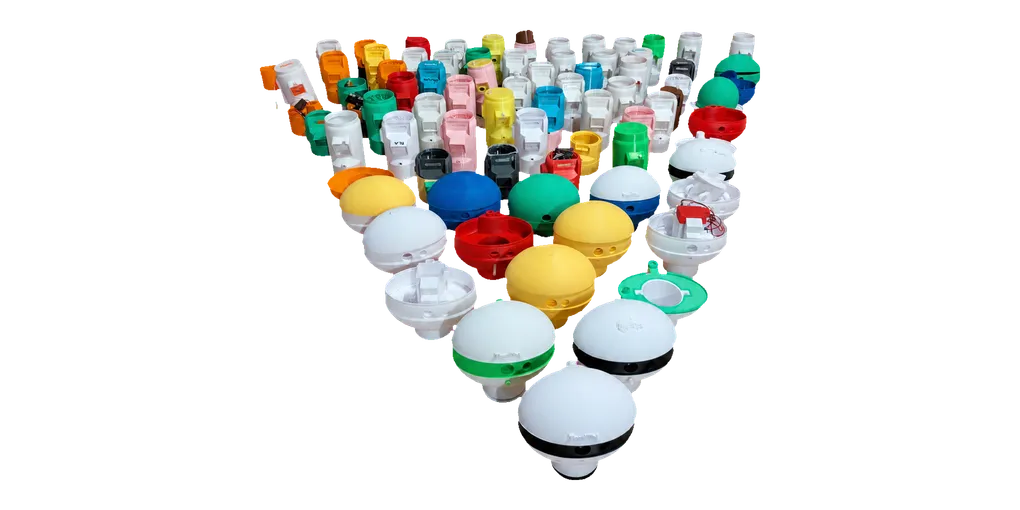
From that point, it was iteration after iteration. We improved the camera and designed a proper housing that could survive outdoors in Queensland weather. We built the spray mechanism using a servo-controlled nozzle connected to a pump. Then we had to get the targeting accurate enough to actually hit what the camera was seeing.
The safety system came out of necessity. We realised early on that we could not just build something that sprays at anything that moves. Native frogs and other wildlife visit the same spots as toads. So do pets. We added dual-layer AI verification along with safety pauses and a protection system for non-toad animals. It all came from real situations where we thought “we need to make sure this never happens.”
Testing was relentless. Rain. Cold. The brutal Queensland summer heat that would overheat components. Nights where the WiFi dropped out and the device needed to keep working independently. Bugs. Actual bugs. And cobwebs on the camera lens that made everything look like a toad.
Going Digital
The device itself was finally working reliably. Next we built the software around it. A cloud dashboard lets you see what the device is doing without having to go outside. The mobile app lets you set up and manage devices from your phone or the website. WiFi connectivity means detection images upload automatically.
We can wake up in the morning and see exactly what happened overnight just by opening the app. That was the game changer for us. No more wondering if the toads came last night. No more heading out in the dark. Just check the dashboard with your morning coffee.
Where We Are Now
We have multiple units running on our property. The AI model is constantly improving because we collect more real-world data from devices in the field. We are also starting to help other Australians who are dealing with the same problem we were.
It is still a small operation. It is just the two of us here in Lowood. We are still testing on the same hobby farm where it all started. But the feedback from other property owners has been really encouraging. Turns out a lot of people are sick of the nightly toad run.
What Drives Us
We genuinely love Australian wildlife. We have seen firsthand the damage cane toads cause to native species. They eat goannas and snakes. They eat frogs too. We even found a 15cm toad eating a giant earthworm more than 30cm long. That is what makes this more than just a tech project for us.
There is also something deeply satisfying about waking up and seeing that the device dealt with toads overnight while we slept. After years of doing it by hand, having a machine handle it feels like a small victory every single morning.
We believe that technology can help with environmental problems at a scale that manual effort simply cannot match. ToadTurret is not going to solve the cane toad crisis on its own. But it can take the nightly burden off property owners. It can also contribute to broader control efforts one backyard at a time.
Join the Availability List
Sick of the nightly toad run? Want something that works while you sleep? Head to our store to join the ToadTurret availability list. We will also sell solar kits along with USB adapters and replacement parts.
Got questions in the meantime? Get in touch. We are always happy to chat.